
Benjamin Franklin: The Quintessential American Polymath
When we think of the Founding Fathers, names like Washington, Jefferson, and Adams often come to mind first. But standing shoulder-to-shoulder with these giants was Benjamin Franklin—a man whose contributions spanned invention, diplomacy, writing, and statesmanship. He wasn't just a key figure in the American Revolution; he was a visionary whose influence shaped the very fabric of the new nation. Understanding Benjamin Franklin's role as a founding father is essential to grasping the spirit of the era that led to America's birth.
Franklin's life was a testament to curiosity, pragmatism, and an unwavering belief in the power of human reason and self-improvement. He embodied the Enlightenment ideals that fueled the revolutionary spirit, but he also brought a down-to-earth sensibility that made him relatable to the common person. His legacy is not just in the documents he helped create, but in the very idea of what an American could be—resourceful, innovative, and dedicated to the public good.
From Printer's Apprentice to Global Statesman
Born in Boston in 1706, Benjamin Franklin's early life was far from privileged. He was the tenth son of a soap and candle maker, and his formal education was brief. Yet, his insatiable appetite for knowledge led him to devour books and teach himself through tireless study. At just 17, he ran away to Philadelphia, the city that would become his home and the crucible for much of his public life.
In Philadelphia, Franklin established himself as a successful printer, publisher, and author. His almanac, 'Poor Richard's Almanack,' became a bestseller, filled with witty aphorisms and practical advice that resonated with ordinary Americans. Many of these sayings, like "A penny saved is a penny earned" and "Early to bed and early to rise, makes a man healthy, wealthy, and wise," are still quoted today. This period also saw him engage in civic improvements, founding Philadelphia's first lending library, a fire department, and an academy that would eventually become the University of Pennsylvania.
The Inventor and Scientist
Franklin's inventive spirit knew no bounds. He was a true polymath, dabbling in fields from meteorology to optics. His most famous invention, the lightning rod, was a groundbreaking safety device that protected countless buildings from fire. His experiments with electricity, including the legendary (and dangerous) kite experiment, helped demystify the force and established him as a leading scientific mind in the colonies and abroad.
His other innovations included bifocal glasses, a more efficient stove (the Franklin stove), and a musical instrument called the glass armonica. These inventions weren't just intellectual exercises; they were practical solutions to everyday problems, reflecting his deep commitment to improving the lives of his fellow citizens. His scientific achievements earned him international acclaim and membership in prestigious societies across Europe.
A Driving Force for Independence
As tensions with Great Britain escalated, Benjamin Franklin the inventor and writer transformed into Benjamin Franklin the revolutionary statesman. He served in the Pennsylvania Assembly, as Postmaster General for the colonies, and spent years in London as a colonial agent, trying to negotiate a peaceful resolution. However, when reconciliation proved impossible, Franklin returned to America in 1775, just as the winds of war were truly picking up.
He was appointed as a delegate to the Second Continental Congress and was part of the Committee of Five tasked with drafting the Declaration of Independence. While Thomas Jefferson was the primary author, Franklin's wisdom and editorial suggestions were invaluable in shaping the final document. His presence lent gravitas and broad appeal to the revolutionary cause. For those interested in the lead-up to this pivotal moment, exploring events like The Boston Tea Party to Independence: America Before 1776 offers crucial context.
Diplomacy in the Age of Revolution
Perhaps Franklin's most critical role came during the Revolutionary War itself. Sent to France as a diplomat, he charmed the French court and populace, securing much-needed military and financial aid for the struggling American cause. His folksy wisdom and intellectual prowess made him a sensation in Paris, and his efforts were instrumental in forging the Franco-American alliance, a turning point in the war.
Following the war, Benjamin Franklin was a key negotiator of the Treaty of Paris in 1783, which officially ended the conflict and recognized American independence. His diplomatic skills were unmatched, navigating complex international relations with a blend of charm, intellect, and shrewd negotiation. His role in these critical international negotiations solidified his status as a pivotal founding father.
The Constitutional Convention and Lasting Legacy
Even in his later years, Franklin remained deeply engaged in public service. At the age of 81, he served as a delegate to the Constitutional Convention in 1787. Though frail, his voice carried immense weight. He famously urged delegates to approve the Constitution, emphasizing the need for compromise and looking towards the future of the republic. His presence lent a sense of continuity and historical perspective to the proceedings.
Benjamin Franklin's contributions to the United States are immeasurable. He was a printer, writer, inventor, scientist, diplomat, and statesman—a true embodiment of the American spirit. His life's work laid foundations not only for the new nation but for the ongoing pursuit of knowledge, liberty, and civic improvement. We celebrate figures like Franklin as we approach America's 250th anniversary, recognizing the enduring principles they championed. The ideas and achievements of these individuals are the bedrock of our nation, and understanding their stories helps us appreciate the milestone we are approaching.
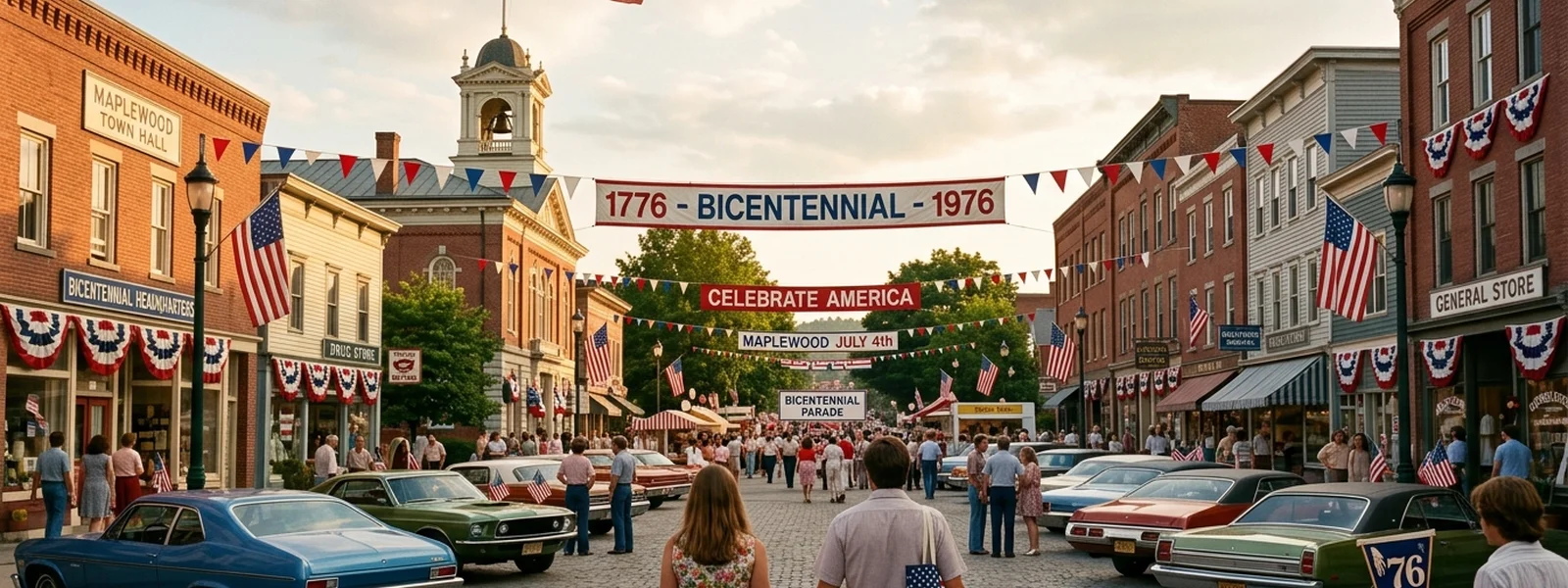
As we look forward to America's 250th anniversary in 2026, it's worth remembering the individuals whose vision and sacrifice made it all possible. The 1976 Bicentennial saw a nation pause to reflect on its first 200 years, creating a wave of commemorative items that many still cherish today. We believe this 250th anniversary deserves the same thoughtful commemoration. Our goal at EST 1776 is to create those keepsakes—designs rooted in history, built to last, and worthy of remembering the moment.
These shirts aren't just apparel; they're a way to wear the history and keep the memory alive. Just as Franklin's inventions and writings have endured, we hope our designs will serve as tangible reminders of this once-in-a-lifetime celebration. Whether you're a history buff drawn to the founding fathers or simply excited about America's biggest birthday party, there's a way to commemorate the Semiquincentennial.
Frequently Asked Questions About Benjamin Franklin
Who was Benjamin Franklin?
Benjamin Franklin was one of the Founding Fathers of the United States, renowned as a leading author, printer, political theorist, politician, freemason, postmaster, scientist, inventor, humorist, civic activist, statesman, and diplomat. He played a crucial role in the American Revolution and the formation of the nation.
What were Benjamin Franklin's most famous inventions?
Some of Benjamin Franklin's most famous inventions include the lightning rod, bifocal glasses, the Franklin stove, and the glass armonica. His scientific work also significantly advanced the understanding of electricity.
How did Benjamin Franklin contribute to American independence?
As a diplomat, Franklin was instrumental in securing the crucial alliance with France during the Revolutionary War. He also served on the Committee of Five that drafted the Declaration of Independence and was a key negotiator of the Treaty of Paris, which officially ended the war.
What was Benjamin Franklin's role in the Constitutional Convention?
At 81, Benjamin Franklin was the oldest delegate at the Constitutional Convention in 1787. His wisdom and advocacy for compromise were vital in the successful drafting and adoption of the U.S. Constitution.
What is Benjamin Franklin's most famous quote?
While Franklin was known for many memorable quotes, some of his most famous include "A penny saved is a penny earned," "Early to bed and early to rise, makes a man healthy, wealthy, and wise," and "Well done is better than well said."
Why is Benjamin Franklin considered a founding father?
Benjamin Franklin is considered a founding father due to his indispensable contributions to the establishment of the United States. This includes his role in drafting the Declaration of Independence, securing foreign aid during the Revolution, negotiating peace treaties, and participating in the creation of the Constitution.

Published by EST 1776 Tees
Celebrating 250 Years of America
Frequently Asked Questions
Who was Benjamin Franklin?
Benjamin Franklin was one of the Founding Fathers of the United States, renowned as a leading author, printer, political theorist, politician, freemason, postmaster, scientist, inventor, humorist, civic activist, statesman, and diplomat. He played a crucial role in the American Revolution and the formation of the nation.
What were Benjamin Franklin's most famous inventions?
Some of Benjamin Franklin's most famous inventions include the lightning rod, bifocal glasses, the Franklin stove, and the glass armonica. His scientific work also significantly advanced the understanding of electricity.
How did Benjamin Franklin contribute to American independence?
As a diplomat, Franklin was instrumental in securing the crucial alliance with France during the Revolutionary War. He also served on the Committee of Five that drafted the Declaration of Independence and was a key negotiator of the Treaty of Paris, which officially ended the war.
What was Benjamin Franklin's role in the Constitutional Convention?
At 81, Benjamin Franklin was the oldest delegate at the Constitutional Convention in 1787. His wisdom and advocacy for compromise were vital in the successful drafting and adoption of the U.S. Constitution.
What is Benjamin Franklin's most famous quote?
While Franklin was known for many memorable quotes, some of his most famous include "A penny saved is a penny earned," "Early to bed and early to rise, makes a man healthy, wealthy, and wise," and "Well done is better than well said."
Why is Benjamin Franklin considered a founding father?
Benjamin Franklin is considered a founding father due to his indispensable contributions to the establishment of the United States. This includes his role in drafting the Declaration of Independence, securing foreign aid during the Revolution, negotiating peace treaties, and participating in the creation of the Constitution.
First Access to New 250th Anniversary Designs
Get new heritage drops, celebration guides, and behind-the-scenes stories delivered before they go public.