
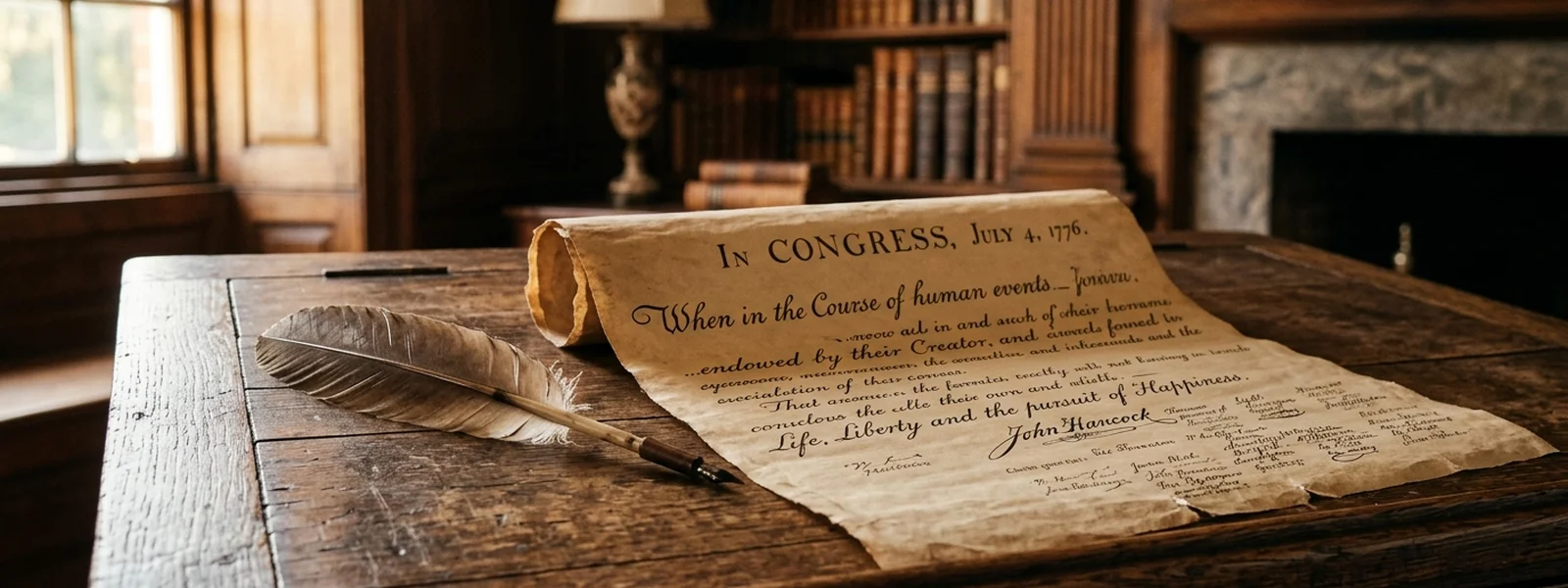
What Happened on July 4th, 1776? The Real Story
When we think about America's birthday, July 4th, 1776, immediately comes to mind. But what exactly transpired on that pivotal day? It wasn't just a date on a calendar; it was the culmination of intense debate, courageous conviction, and a bold declaration that would change the course of history. Understanding what happened on July 4th, 1776, is key to appreciating the foundation of the United States and the ideals it strives to uphold. This date marks the formal adoption of the Declaration of Independence by the Second Continental Congress, a document that articulated the colonies' reasons for severing ties with Great Britain.
The journey to July 4th, 1776, was long and arduous. For years, the thirteen colonies had chafed under British rule, facing taxation without representation and other grievances. Tensions had escalated, leading to open conflict with the start of the Revolutionary War in April 1775. By the summer of 1776, the sentiment for independence had grown significantly, though not without considerable debate among the delegates.
The Second Continental Congress and the Road to Independence
The Second Continental Congress convened in Philadelphia in May 1775, initially hoping for reconciliation with the Crown. However, as British actions grew more oppressive and the war continued, the delegates increasingly leaned towards complete separation. The idea of independence, once a radical notion, began to gain widespread acceptance.
Key figures like John Adams of Massachusetts and Richard Henry Lee of Virginia were ardent proponents of independence. Lee, in fact, introduced a resolution on June 7, 1776, calling for the colonies to declare independence. This resolution spurred the Congress to appoint a committee to draft a formal declaration.
The Committee of Five
Tasked with crafting the document were five prominent delegates: Thomas Jefferson of Virginia, John Adams of Massachusetts, Benjamin Franklin of Pennsylvania, Roger Sherman of Connecticut, and Robert Livingston of New York. Jefferson, known for his eloquent writing, was chosen to draft the primary text, with input and revisions from the other committee members. The process was one of collaboration and careful consideration, aiming to articulate a powerful case for why the colonies were justified in seeking independence.
Jefferson's draft, while drawing on Enlightenment philosophy and earlier colonial declarations, was a masterful piece of persuasive writing. It laid out a philosophical framework for government based on natural rights and then meticulously listed the grievances against King George III that necessitated the separation. The document was intended not just for the colonies but for the entire world to understand the profound step they were taking.
Debate and Adoption
Once Jefferson's draft was presented to Congress on June 28, 1776, it underwent rigorous debate and amendment. Delegates from colonies with differing views on independence voiced their concerns and proposed changes. Some argued for reconciliation, while others pushed for a more immediate and forceful break. The debates were passionate and often lengthy, reflecting the gravity of the decision.
The actual vote for independence occurred on July 2, 1776, when the Congress formally adopted Richard Henry Lee's resolution for independence by a vote of twelve colonies in favor (New York abstained initially but later approved). John Adams famously believed that July 2nd would be celebrated as Independence Day. However, the Congress decided to adopt the formal Declaration of Independence, the document explaining the reasons for this break, on July 4th. This is why the date is etched in our national memory.
The adoption of the Declaration of Independence on July 4th was a moment of profound significance. It was a public pronouncement of a new nation's birth, a bold challenge to one of the world's most powerful empires. The signing of the document by most delegates would occur later, notably on August 2, 1776, but July 4th remained the day of its official approval and announcement.
The Significance of the Declaration
The Declaration of Independence is more than just a historical document; it's a statement of ideals that continues to resonate. Its opening lines—"We hold these truths to be self-evident, that all men are created equal, that they are endowed by their Creator with certain unalienable Rights, that among these are Life, Liberty and the pursuit of Happiness"—form the bedrock of American identity. These words, penned by Thomas Jefferson, articulated a radical vision for human rights and governance.
The Declaration served multiple purposes. It was a formal announcement to the world of the colonies' intent to form a new nation. It provided a justification for the revolution, outlining the philosophical principles and specific grievances that led to the decision. Furthermore, it was a rallying cry for the colonists, uniting them under a common cause and offering a vision of the future they were fighting for. For those interested in the foundational text, reading The Declaration of Independence: The Document That Started Everything offers deeper insight.
The Immediate Aftermath and Celebration
Upon its adoption, the Declaration was ordered to be printed and distributed throughout the colonies. Public readings were held, often accompanied by celebrations and the ringing of bells. In Philadelphia, the State House bell (later known as the Liberty Bell) is said to have rung out, symbolizing the new freedom. These early celebrations, while perhaps not as grand as those we envision for the upcoming 250th anniversary in 2026, marked the beginning of an annual tradition.
The news of the Declaration's adoption spread slowly to other parts of the world. While it was a momentous occasion for the fledgling United States, the Revolutionary War was far from over. The Declaration signaled a point of no return, committing the colonies to a difficult and uncertain fight for their sovereignty. The ideals espoused within it would guide the nation through its formative years and continue to be a benchmark for progress and justice.
We built EST 1776 because the 250th anniversary only happens once. The Bicentennial in '76 created merchandise that people still treasure 50 years later — we wanted to make sure this generation has shirts worth keeping too. These aren't just shirts. They're time capsules. Wearing a commemorative shirt, like one from our Commemorative Collection, is a way to connect with this history.
July 4th Throughout History
Over the centuries, July 4th has evolved from a declaration of intent to a multifaceted national holiday. It's a day for parades, fireworks, family gatherings, and reflections on American history and identity. Each anniversary offers an opportunity to look back at the nation's origins and consider its ongoing journey. The approaching Semiquincentennial in 2026 is particularly significant, marking 250 years since that foundational moment.
The concept of unity, central to the nation's founding, is captured in its motto, "E Pluribus Unum." This phrase, meaning "Out of Many, One," reflects the union of the thirteen diverse colonies into a single nation. Understanding its historical context is vital, and an exploration of E Pluribus Unum: The Motto That United a Nation for 250 Years provides valuable perspective.
The 250th Anniversary: A Moment to Remember
As we approach July 4th, 2026, the Semiquincentennial promises to be a celebration unlike any seen in generations. It’s a chance to reflect on the ideals of 1776, the progress made, and the challenges that remain. It's also an occasion to commemorate the moment with keepsakes that will last, much like the treasures from the Bicentennial 50 years ago.
Wearing apparel that honors this milestone is a way to participate in the celebration and keep the memory alive. Whether it's a shirt celebrating the Declaration, the founding fathers, or simply the date itself, these items become part of the personal history of the celebration. For those looking to mark the occasion with quality apparel, exploring designs that capture the spirit of the era is a great way to prepare.
Frequently Asked Questions About July 4th, 1776
What was the main purpose of the Declaration of Independence?
The primary purpose of the Declaration of Independence was to formally announce and justify the thirteen American colonies' decision to separate from Great Britain. It articulated the philosophical basis for independence, citing natural rights and the right to revolution when governments become destructive of those rights, and listed specific grievances against King George III.
Who wrote the Declaration of Independence?
While a committee of five delegates was appointed to draft the Declaration, Thomas Jefferson was the principal author. The committee included John Adams, Benjamin Franklin, Roger Sherman, and Robert Livingston, all of whom provided input and revisions to Jefferson's draft.
Was the Declaration of Independence signed on July 4th, 1776?
The Second Continental Congress formally adopted the Declaration of Independence on July 4th, 1776. However, the engrossed (official parchment) copy was not signed by most delegates until August 2, 1776, with some signing even later. July 4th is celebrated because it's the date the text was approved and announced.
What were the main grievances listed against King George III?
The Declaration listed numerous grievances, including imposing taxes without consent, quartering troops among the colonists, obstructing trade, cutting off trade, denying trial by jury, imposing taxes without representation, and waging war against the colonies. These actions were presented as evidence that the King aimed to establish an absolute tyranny over the states.
What does "unalienable Rights" mean in the Declaration?
"Unalienable Rights" refers to fundamental rights that cannot be taken away, transferred, or surrendered. The Declaration famously lists "Life, Liberty and the pursuit of Happiness" as examples of these inherent rights, which are considered endowed by a Creator and form the basis of legitimate government.
Why is July 4th considered Independence Day?
July 4th is celebrated as Independence Day because it is the date the Second Continental Congress formally adopted the Declaration of Independence. This adoption signified the colonies' official decision to become independent states, free from British rule, even though the war continued and the formal signing took place later.
What was the historical context leading up to July 4th, 1776?
The historical context was one of escalating conflict between the thirteen colonies and Great Britain. Years of disputes over taxation, representation, and governance, coupled with the outbreak of the Revolutionary War in 1775, created an environment where independence became not only a possibility but, for many, a necessity.

Published by EST 1776 Tees
Celebrating 250 Years of America
Frequently Asked Questions
What was the main purpose of the Declaration of Independence?
The primary purpose of the Declaration of Independence was to formally announce and justify the thirteen American colonies' decision to separate from Great Britain. It articulated the philosophical basis for independence, citing natural rights and the right to revolution when governments become destructive of those rights, and listed specific grievances against King George III.
Who wrote the Declaration of Independence?
While a committee of five delegates was appointed to draft the Declaration, Thomas Jefferson was the principal author. The committee included John Adams, Benjamin Franklin, Roger Sherman, and Robert Livingston, all of whom provided input and revisions to Jefferson's draft.
Was the Declaration of Independence signed on July 4th, 1776?
The Second Continental Congress formally adopted the Declaration of Independence on July 4th, 1776. However, the engrossed (official parchment) copy was not signed by most delegates until August 2, 1776, with some signing even later. July 4th is celebrated because it's the date the text was approved and announced.
What were the main grievances listed against King George III?
The Declaration listed numerous grievances, including imposing taxes without consent, quartering troops among the colonists, obstructing trade, cutting off trade, denying trial by jury, imposing taxes without representation, and waging war against the colonies. These actions were presented as evidence that the King aimed to establish an absolute tyranny over the states.
What does "unalienable Rights" mean in the Declaration?
"Unalienable Rights" refers to fundamental rights that cannot be taken away, transferred, or surrendered. The Declaration famously lists "Life, Liberty and the pursuit of Happiness" as examples of these inherent rights, which are considered endowed by a Creator and form the basis of legitimate government.
Why is July 4th considered Independence Day?
July 4th is celebrated as Independence Day because it is the date the Second Continental Congress formally adopted the Declaration of Independence. This adoption signified the colonies' official decision to become independent states, free from British rule, even though the war continued and the formal signing took place later.
What was the historical context leading up to July 4th, 1776?
The historical context was one of escalating conflict between the thirteen colonies and Great Britain. Years of disputes over taxation, representation, and governance, coupled with the outbreak of the Revolutionary War in 1775, created an environment where independence became not only a possibility but, for many, a necessity.
New Heritage Designs Drop Weekly
Be the first to see new 1776 tees, stories from America's founding, and score members-only deals.